

Contents
Every Question You Hesitate to Ask at a Wine Shop — You Can Ask Them All, Budget Included
Have you ever paced back and forth in front of the shelves at a wine shop — and left empty-handed?
- "Saying my budget out loud feels embarrassing"
- "I can't put my taste into words, so questions stall me"
- "I feel bad taking the staff's time with beginner questions"
That hesitation has it backwards. What actually puts staff in a bind is having to recommend something with no information at all. Give them a budget, an occasion and your taste, and the candidates narrow down fast. Asking isn't a burden — it's the raw material that makes their job possible.
This article gives you ready-to-say lines. There are only three things to remember.
Why it feels hard to ask
The awkwardness usually comes from three places.
Why it feels hard | In reality |
|---|---|
Naming a budget makes me look cheap | A budget is a filtering condition. Staff build recommendations from budgets every day |
I don't know the technical terms | You don't need them. Flavor impressions travel fine in everyday words |
Beginner questions must be a nuisance | Questions are how staff get closer to your taste |
The budget, especially, costs you when you hide it. Without one, staff can only reach for a safe mid-priced bottle, or a famous one that has nothing to do with you. A budget isn't an embarrassment — it's a condition, as ordinary to state up front as it is when buying clothes or appliances.
The three-point template

There are only three things to tell the staff.
What to say | How to say it | Example |
|---|---|---|
1. Budget | Give a range, not an exact figure | "Around $20" |
2. Occasion | Drinking tonight / a gift / laying it down a while | "It's for tonight, at home" |
3. Taste | The impression of a bottle you liked | "I like reds that are smooth, with a cherry feel" |
Put the three into one sentence and you get this:
"I'm looking for a red around $20, to drink at home tonight. I like them smooth and fruity."
That alone lets staff narrow the shelf to a few bottles. The taste words need no jargon. Words like the ones in POURPIN's Hints — the tap-to-select flavor impressions: cherry, smooth, fruity, velvet, vanilla — carry your taste perfectly well. What staff can't act on is "just give me something tasty," because your "tasty" is invisible to them.
Ready-to-say lines, by situation
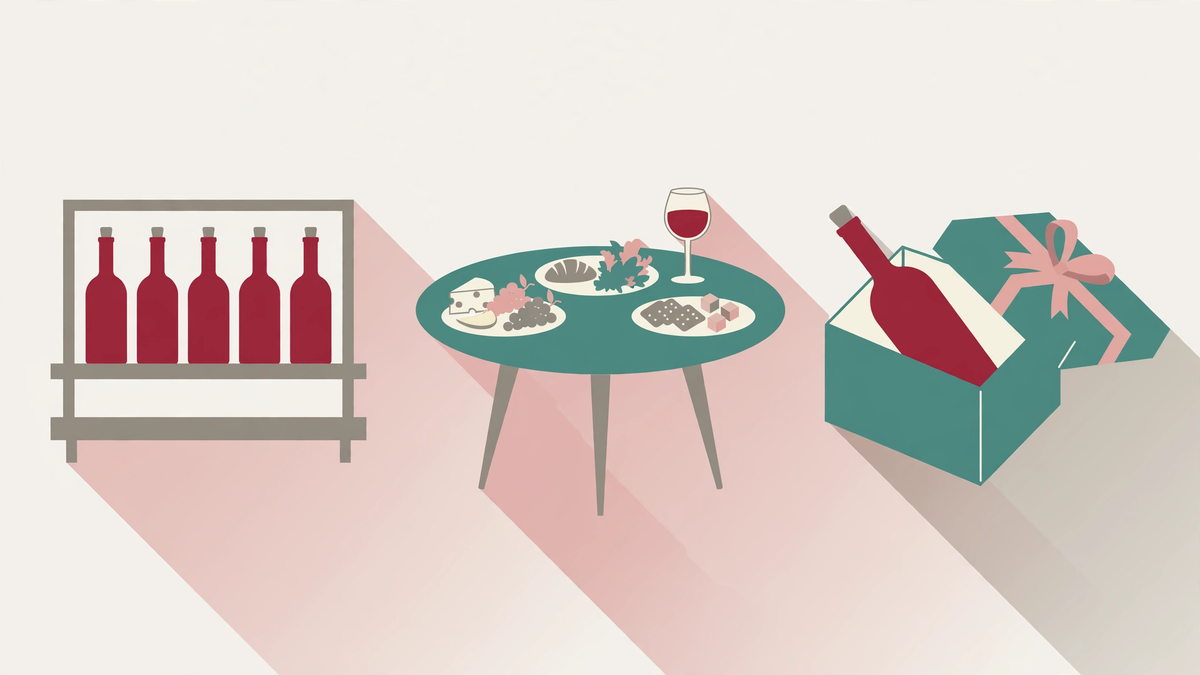
One line per situation, with the reason staff can answer it easily.
Situation | A line you can say as-is | Why staff can answer easily |
|---|---|---|
Budget | "Something in the $15–20 range, decent enough for everyday drinking" | A price band shrinks the shelf to a small section at once |
Taste | "Strong tannin isn't for me — I like a smooth red" | Knowing both a like and a dislike lets them dodge the misses |
Food pairing | "Tonight is tomato-sauce pasta. What goes with it?" | Once the dish is fixed, the classic pairings come out immediately |
Storage and timing | "Is this one for drinking right away, or better after a rest?" | Drinking windows depend on region and making, so the answer gets specific |
A gift | "It's a gift for my boss, who loves wine — I don't want to miss" | Knowing the person and the occasion points to a safe, well-liked classic |
Notice that none of these lines tests your knowledge — each one hands over a condition. Hand staff conditions, and they can work as professionals. A good question isn't measured by how much you know, but by how concrete your conditions are.
What your records answer before you ask
Half of what staff ask you can, in fact, be answered from your own records before you walk in.
Staff ask about your taste because they want your pattern of liking. That answer lives in your POURPIN records. Line up the Hints on the wines you gave 4 stars or more, and your most frequent words surface. Those words are exactly what you can say at the shop.
- Asked "What did the wine you liked taste like?" → show them the Hints on that record
- Asked "What do you usually drink?" → answer with the regions that come up most in your records
The year-end inventory article explains how to read your frequent Hints in detail.
→ A Year of Nights, Counted in Bottles — A Year-End Wine Inventory to See How Your Taste Changed
And if your problem is the opposite — "I can't remember the name of a wine I loved" — it helps to know, before the buying conversation, where on a label to look so you can find it again. That is covered in the label-diagram article.
→ How to Find a Wine When You Can't Read or Remember Its Name — A Label Diagram
Records are also preparation for asking. "No reviews. No ratings. Just your taste." — because the records are nobody's scores but your own, they can serve as your answers at the shop.
How not to miss — rephrasing tips
All it takes is turning vague phrasing into concrete phrasing.
Vague | Rephrased |
|---|---|
"Give me a tasty wine" | "A fruity white that doesn't tire you out" |
"Something cheap is fine" | "In the $15–20 range, to go with a weeknight dinner" |
"A famous one" | "A classic region that never misses as a gift" |
"Something lightish" | "A red with gentle tannin, smooth rather than heavy" |
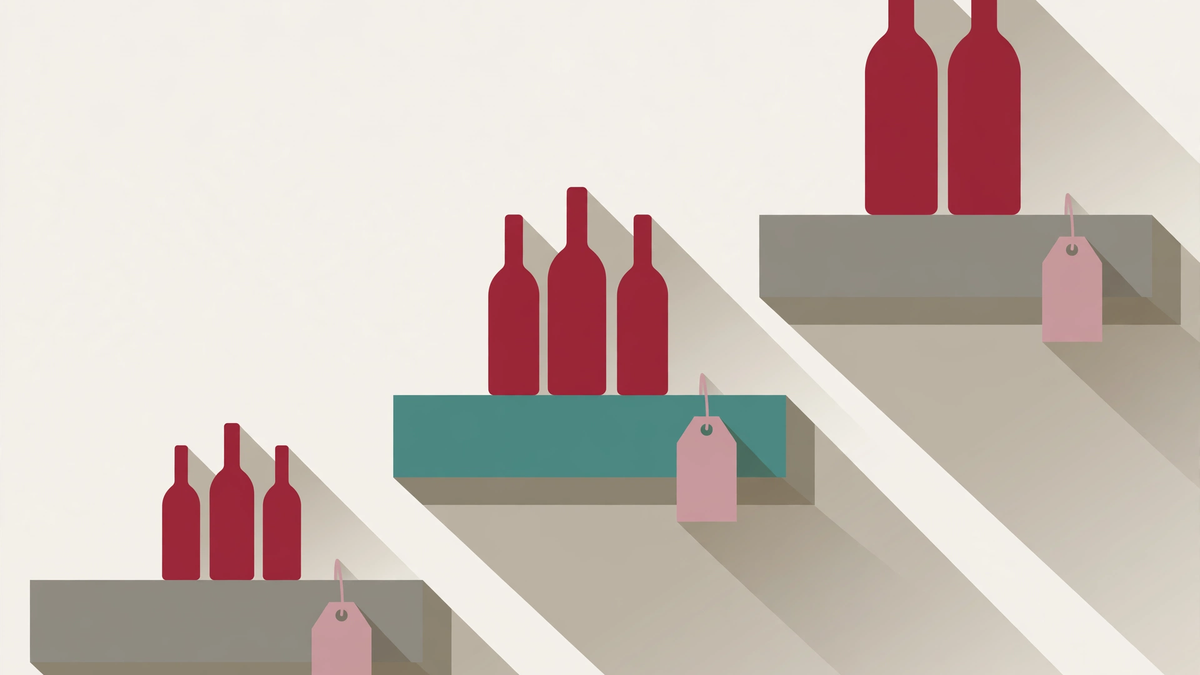
Budgets get easier to say when you think in bands, not single prices: "everyday bottles in the $15–20 range, around $40 for a special day." Give a band, and staff will line up two or three bottles inside it, so you can compare. The point of saying a number isn't the number — it's creating a set you can compare.
FAQ — Asking at a wine shop Q&A
Q1. If I name my budget, won't they think I'm a cheap customer?
No. A budget is a filtering condition and the starting point of a recommendation. Staying silent is what forces staff to guess.
Q2. Can I ask questions without buying anything?
Yes. Keep the candidates they suggest in your records, and they become your shortlist for next time. Even the reason you didn't buy is useful information about your taste.
Q3. If a recommendation misses my taste, can I turn it down?
Absolutely. Saying "I'd like something a little lighter" is itself taste information, and the next candidate gets closer.
Q4. I freeze because I don't know the terms.
When you freeze, describe the occasion instead: "to drink with grilled chicken," "to sip slowly over a weekend." An occasion does the work of jargon.
Summary
- Asking staff isn't a nuisance — it's handing them the material for a recommendation
- The three things to say are budget, occasion and taste
- Your taste words can come straight from the frequent Hints in your own records
Today's one action
Save one three-point sentence in your notes for your next shop visit.
"Around $X, for [occasion]. I like wines that taste [your word]." With that one sentence, the pacing in front of the shelves is over.
Start now
Try it free first
→ Sign in free at pourpin.fun (log up to 30 bottles). The words for your taste at the shop are born from your records.
To keep your records as an asset
→ Premium: log up to 1,000 bottles + detailed search and Export (CSV/JSON). When staff ask, you can pull up your own history of taste on the spot.
Ready to start logging your wine journey?
Log up to 30 wines for free with POURPINNeed more? Premium: unlimited + export for $2.99 USD/month
- Google Play
- App Store


