

Contents
- The big picture — a label is just four places to look
- How to tell the producer name from the cuvee name
- Where the vintage and region/classification sit
- Clues when all you have is a photo
- The five search steps
- Scripts for asking shop staff
- Three mistakes people make when searching
- Bonus — why names are genuinely hard to remember
- Next time, so you don't have to search at all
- FAQ — Finding a wine from its label Q&A
- Summary
- Today's one action
- Start now
How to Find a Wine When You Can't Read or Remember Its Name — A Label Diagram
It's right on the tip of your tongue, but the name just won't come out.
- "I loved a wine at a restaurant, but I can't buy it again because I don't know its name"
- "I have a photo of the label, but I can't tell which part is the name"
- "It's a foreign-language label and I don't know where to start reading"
First, let me say this: not being able to read it is normal. Wine labels aren't designed for people who don't already know how to read them. Once you know the order to look, you can find a wine even without reading it fully.
The big picture — a label is just four places to look
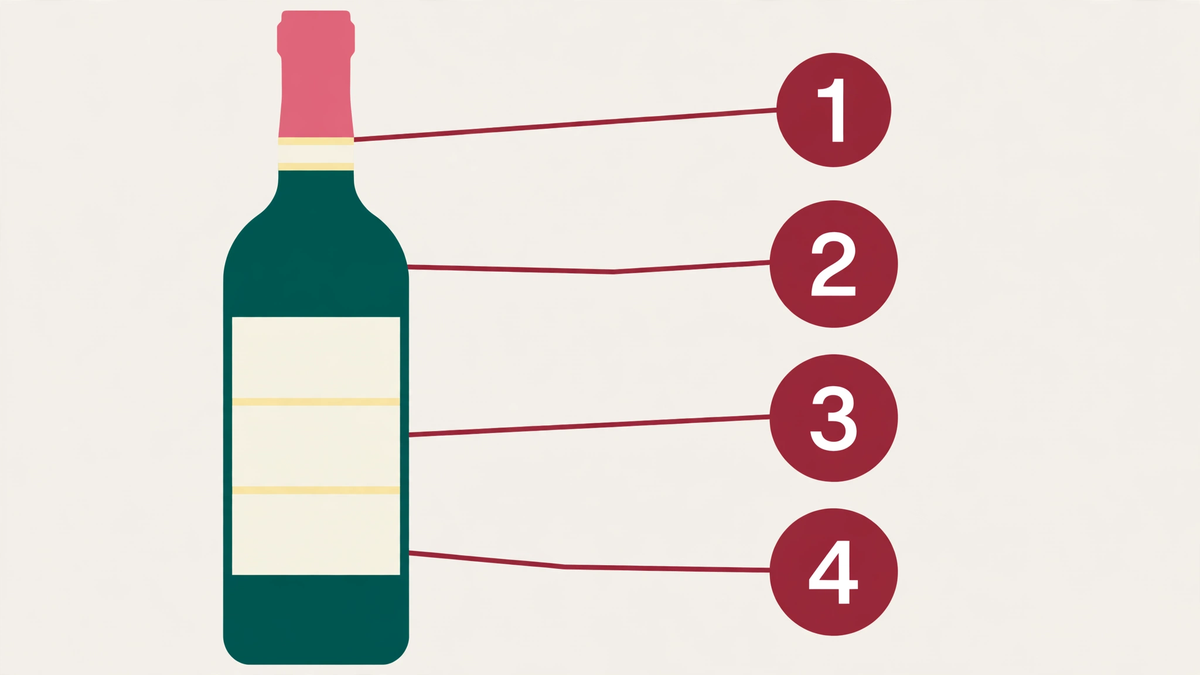
When searching from a label, you only need to look at four places.
- Producer name (top of the label) 2. Cuvee / brand name (middle) 3. Region and classification (middle-lower to lower) 4. Vintage (lower part, or the neck seal)
The biggest misconception is assuming "the biggest words are the brand name." Sometimes the biggest words are the producer's name; sometimes they're the region. Going in order is the shortcut.
This label-diagram feeling is also introduced in POURPIN's YouTube Short The Name on the Tip of Your Tongue.
Element | Where it appears on the label | How to use it when searching |
|---|---|---|
Producer name | Top of the label, the house name that appears in the same place every year | Use it as your anchor when unsure. It stays the same every year, so it makes a stable starting point for a search |
Cuvee (brand) name | Middle of the label, the vineyard or cuvee name | Combine it with the producer to narrow down. Same producer, different cuvee means a different wine |
Vintage | The year, often at the bottom of the label or on the neck seal | Match the year too. A different year means a different wine, even under the same name |
Region and classification | Middle-lower to lower part. The region name is sometimes printed large | Some wines are called by region instead of grape variety, so the region itself becomes a search clue |
How to tell the producer name from the cuvee name
The producer name is the "house name" that appears in the same place every year. The cuvee name is the name of a vineyard or cuvee that house makes.
If you can't tell which is which, search from the producer. Producer names don't change year to year, so they are stable search anchors. Once you know the producer, you can reach the bottle you drank from that house's wine list.
Where the vintage and region/classification sit
The vintage (year) tends to appear at the bottom of the label, or on the seal wrapped around the bottle's neck. It's often printed small, so enlarging your photo helps you find it.
One custom to know about regions: for French wines and others, wines are often called by region rather than grape variety, and the region name may be printed large. If you think "no grape variety is written here," the region name is likely doing that job.
For what each vintage year tends to be like, this guide helps too.
→ Vintage Guide by Birth Year 1980–2005
Clues when all you have is a photo
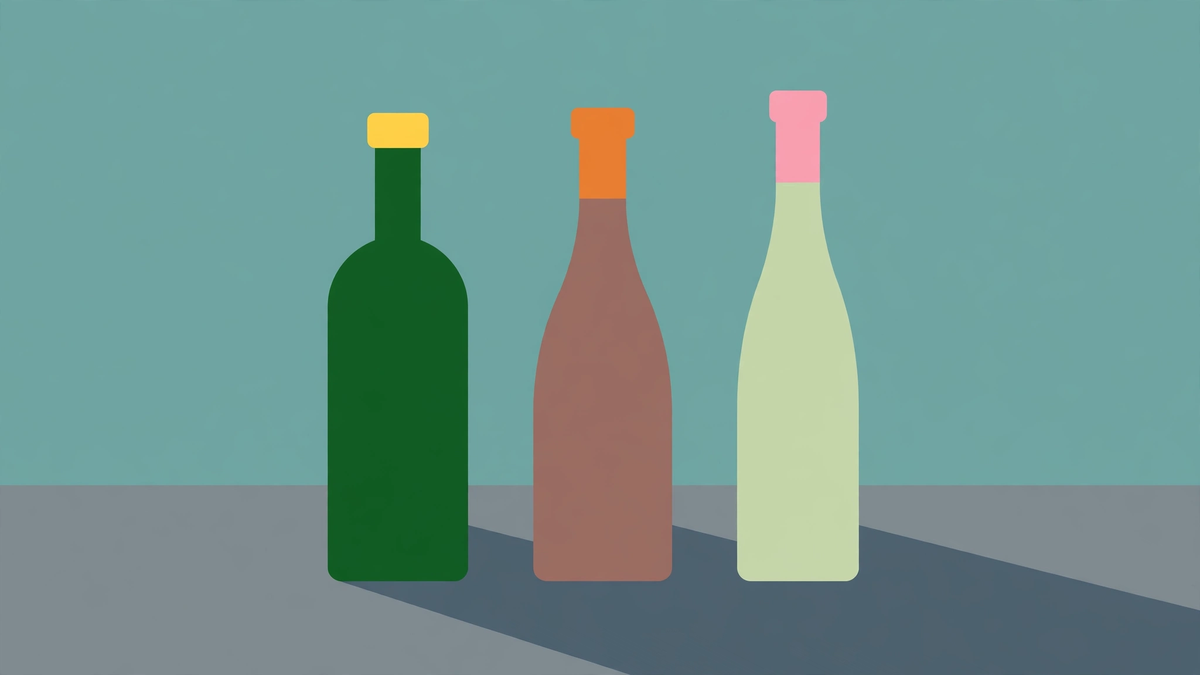
Even if you can't read a word, a photo is full of clues. Ordered from most to least reliable, they look like this.
Clue | What it tells you | Reliability |
|---|---|---|
Back label | Often carries the importer or a local-language description, which can lead straight to the name and region | High |
Label color and shape | A label's design is nearly fixed per producer. Color and shape alone narrow the candidates a lot | High |
Bottle shape | Shoulder slope and slimness narrow the region or type candidates | Medium |
Bottle color | Dark green, brown, near-clear and other color families narrow the type candidates | Medium |
Foil color | The capsule color can be a producer's mark, but many producers share the same color | Low |
If your photo includes the back label, the search gets much shorter. Next time you photograph a bottle, take the back label too, not just the front.
The five search steps
Follow this order.
- Enlarge the photo and pick up one readable word. You don't need to read everything. Take one word, printed large, and use it as-is.
- Recall the shop and the date you drank it. A shop name and a date become clues when you ask the shop.
- Search that word plus the region. One word alone gives too many candidates, so combine it with the region name if you know it.
- Check candidates against your taste memory. Once you've narrowed it to two or three, compare them with what you remember tasting. Use your own Hints vocabulary (cherry, smooth, tannin, dry and so on) to check which one matches "that taste."
- Ask the shop. If you still can't narrow it down, asking the shop is the fastest route. The scripts in the next section make asking easy.
The bottle you find is worth keeping from disappearing again. A photo, a star and Hints mean you won't have to search next time. Start free — up to 30 bottles.
Scripts for asking shop staff
Asking is nothing to be embarrassed about. Shop staff are used to customers who don't know the name. Here are three scripts you can use as-is. Fill in the "around ○○" blank with your own budget.
Script 1: You have a photo
"I'm looking for the wine in this photo. I drank it here before and loved it, but I don't know its name. Do you have the same one, or something similar?"
Script 2: You only know the region
"I'm looking for a wine I enjoyed before. The region was ○○, and it was a red (white). My budget is around ○○. Do you have something similar?"
Script 3: You only remember the taste
"I'm looking for a red I enjoyed before. It wasn't very tannic, and it smelled of cherry. My budget is around ○○. Do you have something similar?"
When describing taste, speaking in your own Hints vocabulary (cherry, smooth, fruity, dry and so on) makes it easier for staff to understand too.
Three mistakes people make when searching
- Trying to memorize the name by heart. Memorizing a foreign-language name by heart is hard for anyone. A photo and a record are more reliable than memory.
- Searching by grape variety alone. For French wines and others, the grape variety is often not printed on the label at all. Variety alone may be unsearchable. Use the producer or region as your anchor.
- Editing or deleting the original photo. Cropping and enlarging are handy, but if you delete the original, you lose clues like the back label and the foil color. Keep the original when you edit.
Bonus — why names are genuinely hard to remember
Wine names are hard to remember, and it's not your memory's fault. There's a custom of naming by region, and the same grape goes by different names in different countries (Syrah / Shiraz, for example), so the naming system itself is complicated.
Reading this together with the article on how to record makes the background clearer.
→ How to Revisit a Favorite Wine: The 30-Second Logging Method
Next time, so you don't have to search at all
Once you know how to search, the last step is prevention. Just photograph and save it on the spot, and next time you won't have to search.
With POURPIN, you can keep the label photo, your star and your Hints. Even if you don't know the name, you can start a record with the photo, star and Hints. Once you learn the name, edit the record later and add it.
Here is the detailed method.
→ How to Revisit a Favorite Wine: The 30-Second Logging Method
FAQ — Finding a wine from its label Q&A
Q1. I don't even have a photo. Can I still find it?
If you remember the shop, the date and the taste, asking the shop is the fastest route. With memory alone, another option is narrowing it to two or three candidates and tasting them side by side. Organizing your taste memory in your own Hints vocabulary makes it easier to describe.
Q2. I can't read a single word on the label.
You don't need to read it. Take the largest printed word as-is and put it into a search box or show it to shop staff. You can leave the reading to people and search tools.
Q3. Can I still log a wine the AI scan couldn't read?
Yes. A photo, a star and Hints are enough for a record. Even if you don't know the name, start the record first, and edit it later to add the name once you learn it.
Q4. Does the same wine from a different year taste the same?
Taste changes with the year — that's a given with wine. When searching, match the year too. The vintage guide is also useful for what each year's vintage tends to be like.
→ Vintage Guide by Birth Year 1980–2005
Summary
- A label is searchable from just four places: producer, cuvee, year and region
- Even with only a photo, color, shape and foil are clues
- Asking is nothing to be embarrassed about. A script is enough to get through
Today's one action
Open one label photo in your camera roll and note down a single readable word.
That alone gives you a starting point for the next time you search for that wine.
Start now
Try it free first
→ Sign in free at pourpin.fun (log up to 30 bottles). Your label photos, stars and Hints are never published.
To keep your records as an asset
→ Premium: unlimited records + Export (CSV/JSON). A history of the bottles you tracked down, kept in your own hands.
Ready to start logging your wine journey?
Log up to 30 wines for free with POURPINNeed more? Premium: unlimited + export for $2.99 USD/month
- Google Play
- App Store


