

Contents
- The guide by type: first, know roughly how many days
- Storage is just three steps: stopper, upright, refrigerated
- How to tell if it is still good: three signs
- Record the opening date: so the next bottle is never a guess
- Three common mistakes: well-meant, but working against you
- FAQ: storing opened wine
- Summary
- Today's one action
- Log up to 30 bottles free with POURPIN
How Long Does Opened Wine Last? A Simple Guide by Type — and How Recording the Opening Date Saves the Next Bottle
There is an opened bottle sitting in your fridge. Is it still good, or should you throw it away? Have you ever been stuck on that question?
- "I opened this red three days ago — is it still fine?"
- "Sparkling wine seems flat by the next day."
- "I can't even remember which day I opened it, so I can't judge at all."
An opened wine starts changing the moment it meets air. That does not mean it goes bad overnight. Each type has a rough "good until about here" window, and how you store it changes that window. This article covers the guide by type, three storage steps you can start today, and a simple way to never forget the opening date again. Note that the day counts here are general guidelines. They vary with the wine itself and how it was stored — they are not a guarantee that a bottle is good until a specific day.
The guide by type: first, know roughly how many days
Refrigeration is the baseline for opened wine — including red wine. Kept refrigerated, the rough windows by type are as follows.
Type | Refrigerated guide | Notes |
|---|---|---|
Red wine | 3–5 days | Fuller, more tannic reds tend to last longer |
White wine and rosé | 5–7 days | Crisp, higher-acid whites tend to last longer |
Sparkling wine | 1–3 days | With a dedicated sparkling stopper. The fizz fades day by day |
Fortified wine (port and similar) | 2–4 weeks | Higher alcohol keeps it stable longer than the rest |
Remember that these windows are about "how long it stays delicious," not a strict safe-or-unsafe line. Passing the guide does not automatically make a wine harmful — but the aroma fades, the taste flattens, and it stops being enjoyable. If you want it at its best, finish it in the first half of the window.
Storage is just three steps: stopper, upright, refrigerated
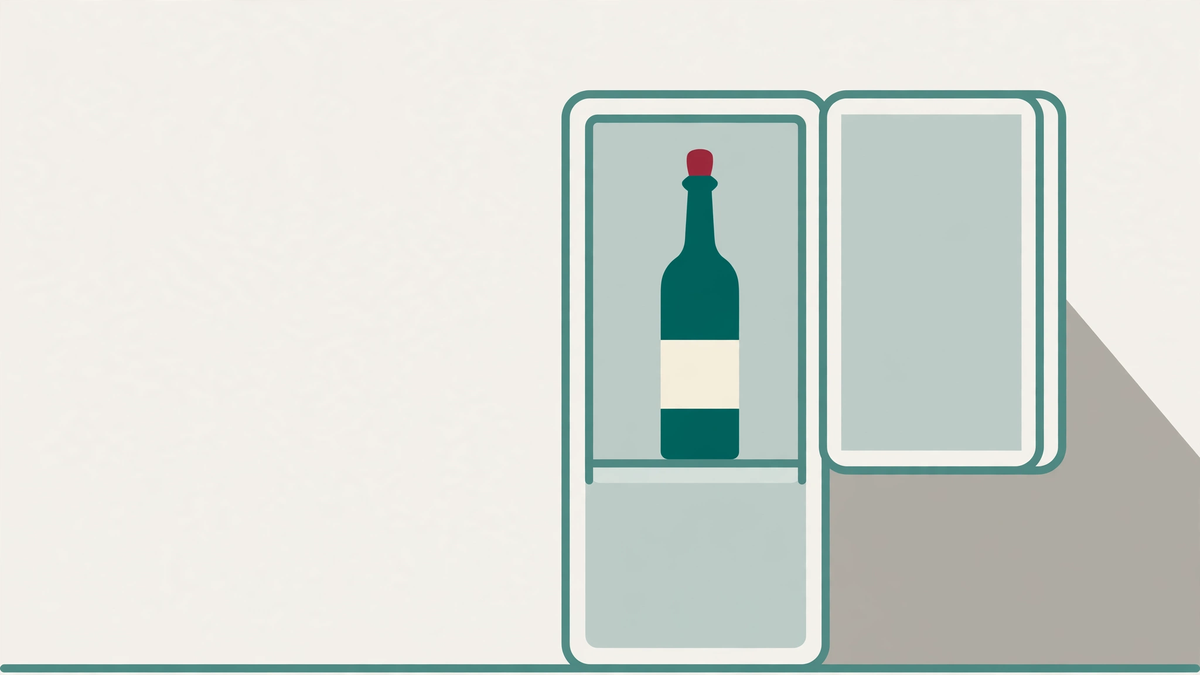
Storage takes only three steps. No special equipment is needed to get this far.
Step | What to do | Why |
|---|---|---|
1. Stopper it | Push the original cork back in, or use a wine stopper | Less contact with air. Left open is the fastest way to lose it |
2. Stand it upright | Keep the bottle upright in the fridge | Upright means a smaller surface where wine meets air than lying down |
3. Refrigerate it | Always refrigerate, red wine included | Cold slows down how fast the wine changes |
Sparkling wine needs one extra note. A regular wine stopper cannot hold the pressure, so always use a stopper made for sparkling wine. The trick of sticking a spoon in the neck is not a confirmed way to keep the fizz. A dedicated stopper is the reliable choice.
If you want to cut air contact further, you can decant the rest into a smaller container, or use a vacuum pump to draw air out. Both have trade-offs — decanting spills easily, and pumps do not suit every wine. Start by doing the three steps above properly.
How to tell if it is still good: three signs
For a bottle past its guide window, or one whose opening date you forgot, check these three signs. If any one of them is strong, do not force it — use it for cooking, or let it go.
Sign | Examples |
|---|---|
The smell changed | A sharp, vinegar-like smell, or a flat, cardboard-like oxidized smell |
The taste flattened | The aroma is gone and it tastes thin, or only the acidity stands out and the balance is lost |
The colour changed | A red turning brownish, a white turning deep yellow |
If you are unsure, the simplest rule is: stop when it no longer tastes good. For opened wine, "does it still taste good?" matters more than precision. And if you feel unwell about it, do not push yourself.
Record the opening date: so the next bottle is never a guess
Just as important as the storage steps is keeping the date you opened it. If you know the opening date, you can check it against the guide above and see at once how many days you have left. Memory feels reliable, but after three days it gets vague. A record is certain.
In POURPIN, it is simple. On the day you open a bottle, create its record and write the opening date and what is left in the memo — "Opened Oct 28, half left" is enough. On the day you finish it, add your star rating and Hints to complete the record. Hints are POURPIN's tasting words: 25 Japanese words across aroma, taste, and finish. With the opening date kept alongside them, the next time you open the same wine you will also know how many days it took you to finish it last time.
When opened-bottle records pile up, they are also useful at year-end inventory time. The inventory steps are covered in a separate article.
→ A Year of Nights, Counted in Bottles — A Year-End Wine Inventory to See How Your Taste Changed
Three common mistakes: well-meant, but working against you
Mistake | What happens | Do this instead |
|---|---|---|
Left out at room temperature | It changes fast, and the aroma is gone by the next day | Refrigerate every opened bottle, red wine included |
Refrigerated lying down | More surface where wine meets air | Stopper it, and keep it standing upright |
Trusting your memory for the date | Three days later, "when did I open it?" is already vague | On opening day, write the date in the record's memo |
The third mistake matters most: even perfect storage cannot help you judge if you do not know the opening date. Stoppering and refrigerating keep the wine; recording the date lets you judge it. Together, they cut the waste.
FAQ: storing opened wine
Q1. Does sticking a spoon in the neck keep sparkling wine fizzy?
It is not a confirmed way to keep the fizz. For sparkling wine, a dedicated sparkling stopper, properly sealed, is the reliable choice. Do not rely on the spoon.
Q2. Can I freeze leftover wine?
For cooking, yes. Freeze it in small portions, for example in an ice-cube tray, and use it in stews and sauces. But the aroma and taste drop sharply, so thawing it to drink is not recommended.
Q3. Can wine past its guide window still be used for cooking?
Often, yes, for dishes that are heated. But avoid anything that has turned strongly vinegary or smells off. Taste it first, even for cooking.
Q4. I already forgot the opening date. What do I do?
Check the three signs above — smell, taste, and colour. And from the next bottle on, make it a habit: on opening day, write the date in the record's memo. One kept record is enough to stop the guessing next time.
Summary
- Refrigeration is the baseline for opened wine. Red wine goes in the fridge too
- Guides: red 3–5 days, white and rosé 5–7 days, sparkling 1–3 days, fortified 2–4 weeks (guides, not guarantees)
- Storage is three steps only: stopper it, stand it upright, refrigerate it
- The test is "does it still taste good?" If unsure, do not force it
- On opening day, write the date and what is left in the record's memo
Today's one action
Check one opened bottle in your fridge, and write its opening date in the record's memo. If you do not know the date, check the three signs — smell, taste, colour — and decide today whether to finish it or cook with it. That alone turns a bottle of "opened sometime, unknown" into a bottle you can judge.
Log up to 30 bottles free with POURPIN
With POURPIN, you can log up to 30 bottles free once you sign in (guest use without signing in is 3 bottles). Start a record from a photo of the label, keep the opening date in the memo, and add stars and Hints when you finish it. Premium (¥300/month or ¥3,000/year) raises the cap to 1,000 bottles and adds detailed search and Export (CSV/JSON). Start with the free 30, and keep a record of the wine you open.
Ready to start logging your wine journey?
Log up to 30 wines for free with POURPINNeed more? Premium: unlimited + export for $2.99 USD/month
- Google Play
- App Store


